
Okay, real talk for a second.
There are days when I’m standing in the kitchen at 6 PM, staring into the fridge like it personally owes me an answer… If you want to clear that evening chaos, learning how to use AI to meal plan is the ultimate game-changer.
It’s time to stop trying to remember if you paid that bill, whether the school project is due tomorrow, and what on earth you were supposed to do after lunch that you completely forgot.
Sound familiar?
If you’re nodding — welcome. You’re in the right place.
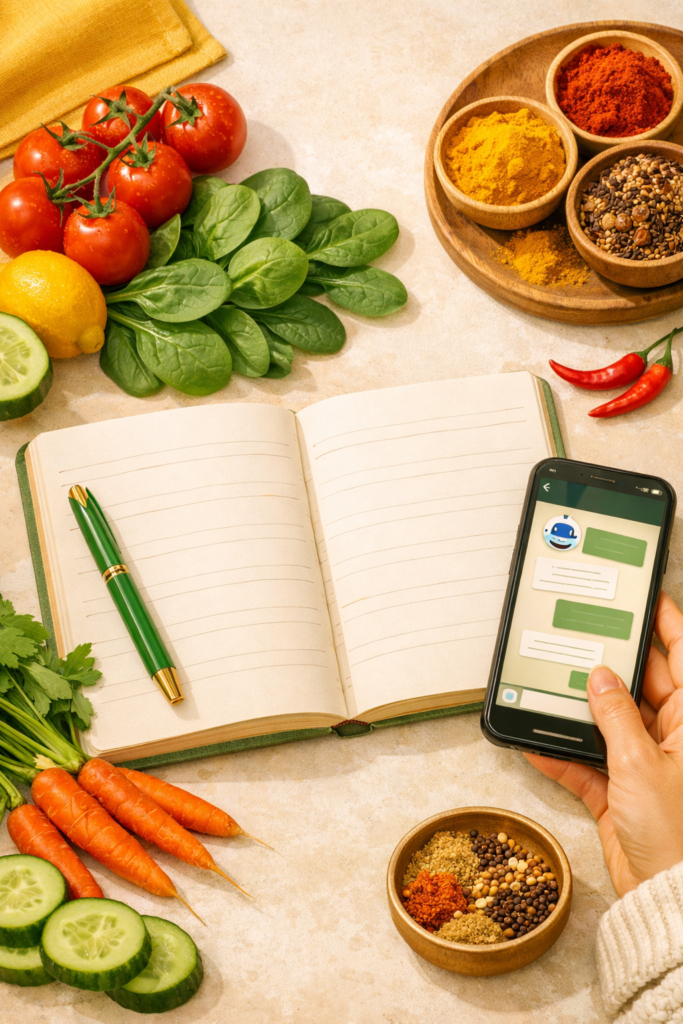
Because today I want to talk about something that has genuinely changed my daily life in ways I didn’t expect: using AI to meal plan and organize, well, basically everything. Not in a robotic, tech-bro productivity-hacking kind of way. In a warm, practical, this-actually-works-for-real-life kind of way.
So let’s get into it.
🤖 Wait — Can AI Really Help With Everyday Life Stuff?
Short answer: yes, absolutely.
Long answer: AI tools like Claude, ChatGPT, and Gemini have moved way beyond just answering trivia questions or writing emails for you. When you know how to talk to them, they become something closer to a very patient, very knowledgeable personal assistant who never gets tired, never judges your fridge situation, and is available at 11 PM when you’re trying to figure out tomorrow.
The key is learning to give AI the right kind of prompts — specific, personal, and contextual. And once you do that? The results are genuinely useful.
Let me walk you through exactly how this works for meal planning and life organization.
🥘Part 1: How to Use AI to Meal Plan (The Ultimate Game-Changer)
Meal planning sounds simple until you’re actually doing it — accounting for what’s already in your pantry, what your family likes, what’s in season, budget constraints, nutrition balance, and the fact that someone in your house suddenly decided they don’t eat onions anymore.
This is where AI shines.
Here’s how to do it step by step:
Step 1 — Tell AI your real situation. Don’t be vague. When you use AI to meal plan, the more specific you are, the more useful the plan will be.
“I need a 5-day Indian vegetarian meal plan for a family of 4. We have rice, dal, atta, and basic vegetables at home. Budget is moderate. Include breakfast, lunch, and dinner. Keep it simple — no more than 30 minutes of cooking per meal.”
Step 2 — Ask for a grocery list. Once you have your meal plan, follow up with: “Now give me a consolidated grocery list for this meal plan, organized by category.” Done. No more wandering supermarket aisles wondering if you already have cumin at home.
Step 3 — Customize ruthlessly. This is exactly why choosing to use AI to meal plan beats any traditional subscription app. You can say “Replace Wednesday’s dinner…
Step 4 — Save your winning plans. When AI gives you a meal plan that actually worked well for your week, save it. You can even ask AI to “create a rotating 4-week meal plan using these weekly plans” so you’re never starting from scratch again.
One thing I love doing is asking AI to plan meals around what’s already in my kitchen. Just type: “I have these ingredients: [list them]. What can I make for the next three days without buying anything new?” It’s honestly like magic — especially toward the end of the month.
📋 Part 2: AI for Life Organization (Your Chaos, Tamed)
Meal planning is just the beginning. Once you realize how well AI handles that, you naturally start asking — what else can it do?
The answer: a lot.
🗓️ Weekly Planning
Every Sunday, I spend about ten minutes with an AI tool doing a brain dump of everything on my plate for the upcoming week — tasks, appointments, to-dos, things I’ve been putting off. Then I ask:
“Help me organize this into a realistic weekly schedule. I have school pickup at 3:30 PM daily, cooking responsibilities morning and evening, and I work on my blog for about 2-3 hours a day.”
What comes back is a structured, realistic plan — not some idealized productivity fantasy, but an actual schedule that accounts for my real life. It also gently flags if I’ve crammed too much into one day, which is something my optimistic Sunday self always needs.
Once you see how easy it is to use AI to meal plan, applying it to your weekly calendar is the next logical step to clear your mental load.
🧹 Household Task Management
Household management is invisible work. It’s endless, it repeats, and it rarely gets acknowledged. AI can help you build systems around it so things stop falling through the cracks.
Try this prompt: “Create a weekly household cleaning schedule for a medium-sized Indian home with two kids. Divide tasks between daily, alternate days, and weekly. Keep it manageable — about 30-45 minutes of cleaning per day maximum.”
You’ll get a practical, balanced schedule you can actually follow — and adjust it any time your situation changes.
📦 Pantry and Grocery Organization
Ask AI to help you build a master pantry list of staples your household always needs. Then every week, you just check what’s running low against the list rather than trying to remember everything from scratch.
You can even ask: “What are the 30 essential pantry staples for a North/South Indian vegetarian household?” and use that as your baseline forever.
🧠 Decision Fatigue? Outsource It.
This one is underrated. Decision fatigue is real — by mid-afternoon, most of us have made so many small decisions that our brain starts to resist making more. AI is incredibly useful for offloading small decisions.
“Give me 5 quick breakfast ideas that take under 10 minutes and use only pantry staples.”
“What’s a good gift for a teacher under ₹500?”
“Suggest a weekend activity for a family with young kids that doesn’t involve screens.”
These tiny outsourced decisions add up to a noticeably calmer, less exhausted version of you by evening. Trust me on this one.
💡 Tips to Get the Most Out of AI for Daily Life
- Be specific and personal. Vague prompts give vague results. The more context you give — family size, dietary preferences, time available, budget — the more tailored and useful the output.
- Treat it like a conversation. Don’t just take the first response and walk away. Follow up, refine, ask it to adjust. “Make this simpler” or “Can you break this down day by day?” are completely valid follow-ups.
- Use it for templates. Ask AI to create reusable templates — weekly meal plan format, grocery list template, cleaning schedule framework — that you fill in each week. This saves enormous time in the long run.
- Don’t aim for perfection. AI will give you a solid starting point. You tweak it to fit your life. The goal is a good-enough system that you’ll actually use, not a perfect one that lives only on paper.
🌿 The Bigger Picture: Mindful Use of AI
Here’s something I want to be honest about: AI is a tool, not a replacement for your own wisdom and intuition about your family and home. You know things about your household that no AI ever will — the moods, the preferences, the rhythms, the unspoken dynamics.
The best way to use AI is as a starting point and a sounding board. Let it do the heavy lifting on structure and logistics so your mental energy is freed up for the things that actually need you — the creativity, the connection, the judgment calls that only a person who loves their family can make.
Used mindfully, AI doesn’t make your life feel more robotic. It actually makes it feel more spacious. More breathing room. Less mental clutter.
And honestly? That’s the whole point of Mindful AI Hacks.
💬 Your Turn!
Have you tried using AI for meal planning or home organization yet? What worked, what surprised you, or what are you still figuring out? I’d love to hear in the comments below — this is one of those topics where real-life experiences are worth so much more than any guide. 😊
And if you found this helpful, share it with another busy person in your life who could use a little AI-powered breathing room. 💚