
To turn goals into systems is to stop relying on motivation and start building small, repeatable routines that carry you toward what you want. We all begin the year full of energy and big goals. By February, many of those goals fade, and it isn’t because we’re lazy. It’s because a goal tells you where to go but not how to get there on an ordinary Tuesday. 🌿
Table of Contents
Welcome to Day 28 of the New Year Prep series. Over the past weeks you’ve reflected, reset and planned. Today you’ll turn all of that into a working machine. In this guide, you’ll follow 7 clear steps to turn goals into systems, using AI to build trackers, reminders and reviews that keep you going without constant effort.
If you missed them, start with Day 27: Create Your Personal Rulebook and Day 19: Build Your Ideal Week. Your rules and your weekly plan are the foundation for today’s work.
🌟 Why You Need to Turn Goals Into Systems
A goal is a result you want, like saving a certain amount or publishing a product. A system is the process you follow regularly that makes that result more likely, like moving money on payday or writing every Wednesday.
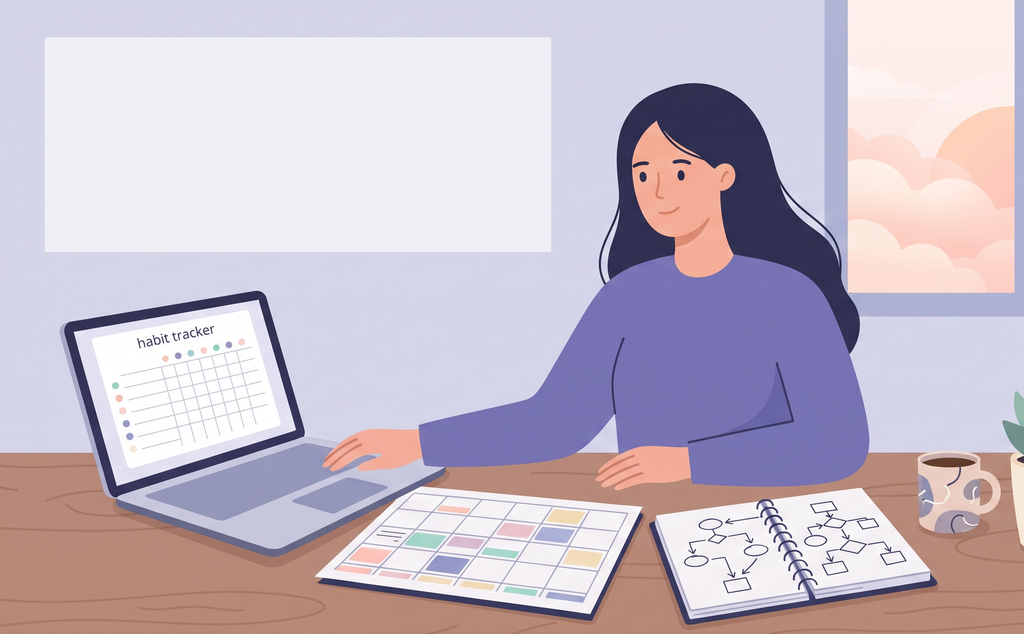
Goals give direction, but systems create progress. A goal can feel far away and stressful, while a system is something you can complete today. When you focus on the system, you can succeed every day, even before you reach the result.
Systems also protect you on low-energy days. Motivation rises and falls, but a simple routine with a clear trigger keeps moving.
🎯 Step 1: Choose Your Top Three Goals
Gather everything you’ve created in this series and pick no more than three goals for the first 90 days:
- Your three priorities from Day 4
- Your 2027 money plan from Day 11
- Your learning plan from Day 24
- Your 90-day work goal from Day 25
Write each as a clear outcome with a date, such as “Save an emergency fund of one month’s expenses by June.” If you have more than three, move the rest to your Later List. Too many goals mean none get a real system.
🧭 Step 2: Separate the Goal From the System
For each goal, write two things side by side: the result you want and the regular action that will create it. Here are some examples:
| Goal (result) | System (regular action) |
|---|---|
| Build a one-month emergency fund | Automatic transfer on payday and a 10-minute money check every Sunday |
| Learn a new skill in 90 days | 30 minutes after morning tea, five days a week |
| Grow my blog | Write on Wednesday mornings and publish every Friday |
| Feel healthier | A 10-minute walk after dinner and a fixed bedtime |
Notice that each system is something you can do today. It doesn’t depend on luck or on other people.
🔧 Step 3: Focus on Inputs You Control
Some parts of a goal are outside your control, like how many people read your post or how the market behaves. Other parts are fully in your hands. Divide each goal into:
- Outputs: the results you can’t fully control (followers, income, weight)
- Inputs: the actions you can control (posts published, money saved, minutes practiced)
Build your system around inputs. If you do your inputs consistently, outputs usually follow. And when results are slow, you can still feel proud because you did what you planned.
Keep your inputs small. “Write 100 words” is better than “write a blog post,” and “put on walking shoes” is better than “exercise for an hour.” A tiny action is much easier to start.
⚙️ Step 4: Design Each System With Four Parts
A strong system has four simple parts:
- Trigger: the cue that starts it (“After I make my morning tea…”)
- Action: the small step you take (“…I’ll study for 30 minutes.”)
- Tracking: the proof you did it (a tick on a tracker)
- Reward: something that feels good (a checkmark, a stretch, a favorite song)
Triggers work best when they follow the “if-then” style known as implementation intentions: “If it’s 9 PM, then I put my phone on the charger.” Planning the situation in advance makes it easier to act when the moment comes.
Also plan a minimum version for hard days, such as five minutes instead of thirty. And add a restart rule: if you miss a day, you simply continue the next day without guilt.
🧰 Step 5: Build One Simple Tracking Tool
You need a way to see your progress, but it must be simple. Choose one tool and stick with it:
- A paper habit tracker on the fridge or in your planner
- A Google Sheet with habits in rows and days in columns
- A notes app checklist that repeats weekly
- A Kanban-style board with three columns, such as To do, Doing and Done. The Kanban method is a simple way to see your work at a glance
Then create a one-page weekly dashboard with your three goals, their systems and a quick scoreboard. Keep it somewhere you’ll see it every day. Too many apps and complicated setups kill good systems, so keep it light.
🤖 Step 6: Use AI to Build and Automate Your Systems
This is where AI saves you hours. Use it to design your tracker, write your routines and set up reminders. Try these prompts:
I have three goals for the next 90 days: [list]. For each, design a simple daily or weekly system with a trigger, a small action, a way to track it and a minimum version for busy days. Present them in a table.
Create a simple habit tracker layout that I can copy into Google Sheets, with habits in rows, days of the week in columns and a weekly total. Explain how to set it up step by step.
Write a 10-minute weekly review checklist for me with five questions about my wins, challenges and next week’s priorities.
You can then use your tools to automate the boring parts:
- Recurring calendar events for your system blocks
- Phone reminders or alarms tied to your triggers
- Recurring task lists that reset every week
- Automatic transfers and bill payments for money goals
Important: keep the system simple, because AI can create something so detailed that you never use it. Check every plan against your real life, and don’t share private information, such as account numbers or sensitive documents, in your prompts.
🔁 Step 7: Review Every Week and Fix What Isn’t Working
Systems get better through small adjustments. Hold a 15-minute weekly review, such as Sunday evening, and ask:
- What went well this week?
- Where did my system break down, and why?
- What one small change would make it easier?
- What are my top three actions for next week?
When a system isn’t working, don’t blame yourself. Check these common fixes:
| Problem | Try this |
|---|---|
| I keep forgetting | Change the trigger or add a visible reminder |
| It takes too long | Shrink it to a two-minute version |
| It feels boring | Add a small reward or pair it with music or tea |
| It’s too hard to start | Prepare everything the night before |
| It no longer matters | Replace it, because your goals can change |
Also hold a monthly review to check your progress toward your 90-day goals, and a quarterly reset to choose your next goals. Celebrate streaks, even small ones, because they prove the system is working.
Please note: this guide is for general planning and reflection. Choose systems that suit your own life, health and responsibilities.
✅ Turn Goals Into Systems Checklist
- ☐ Chose my top three goals for 90 days
- ☐ Wrote a goal and a system side by side
- ☐ Focused on inputs I can control
- ☐ Designed each system with a trigger, action, tracking and reward
- ☐ Created a minimum version and a restart rule
- ☐ Built one simple tracking tool and a weekly dashboard
- ☐ Used AI to design and automate my systems
- ☐ Scheduled a weekly review
❓ Turn Goals Into Systems: Frequently Asked Questions
What does it mean to turn goals into systems?
It means replacing a distant result with a small routine you can repeat regularly, so progress happens automatically instead of depending on motivation.
Do I still need goals if I have systems?
Yes. Goals give you direction and systems give you the daily steps. You need both.
How many systems should I run at once?
Start with one system per goal, so no more than three. Add more only after the first ones feel natural.
What if my system stops working?
Check the trigger, shrink the action and remove friction. If it still doesn’t fit your life, redesign it. That’s a normal part of the process.
🌿 Final Thoughts
Big goals feel exciting, but small systems are what move you forward. You don’t need a perfect plan or endless motivation. You need a clear trigger, a tiny action and a weekly check-in. Build that, and your year will take care of itself, one calm step at a time.
Tomorrow, on Day 29, head over to our sister blog to Prepare January Before January, so your first month starts smoothly. And if you’d like all the New Year Prep worksheets in one place, grab the Ultimate New Year Prep Guide from The Mindful Studio Shop.
Now it’s your turn: which goal are you turning into a system first? Share it in the comments. I’d love to cheer for you! 👇